Houston Docks
- Thousands of satisfied customers
- Local and family owned
- 15+ years in business
- Licensed and insured
- Always FREE Quotes
Trusted, Local Dock Builder in Trinity River, TX
We build, repair, and maintain docks and boathouses that stand up to Lake Livingston’s waves, wind, and water-level changes. With 15+ years in marine construction and full insurance coverage, Houston Docks is the Dock Builder Trinity River TX homeowners and HOAs rely on for safe, code-compliant work.
From fixed piling piers to floating docks with gangways, we handle design, permitting help, pile driving, lifts, electrical, and shoreline stabilization. We know TRA rules, HOA approvals, and NEC 2023 Article 555 for dock power. Ready to protect your shoreline and your boat? Contact us today for a free on-site estimate.
Expert Dock Construction, Boathouses, and Marine Services on the Trinity River
We specialize in waterfront structures built for Lake Livingston conditions—durable materials, correct pile embedment, and safe electrical. Our team manages everything from concept and permits to construction and ongoing maintenance.
Dock Construction
Whether you need a fixed piling pier for open-water exposure or a floating dock for a protected cove, we engineer builds to your shoreline and water depth. We set CCA-treated timber piles to specified embedment with a spud barge and vibratory hammer, then frame with marine-grade lumber or aluminum and deck in composite/PVC or treated pine. Cross-bracing, hurricane strapping, and through-bolting improve longevity. We also plan gangway slope and freeboard for seasonal 1–2 ft fluctuations on Lake Livingston. Learn more about our Dock Construction services.
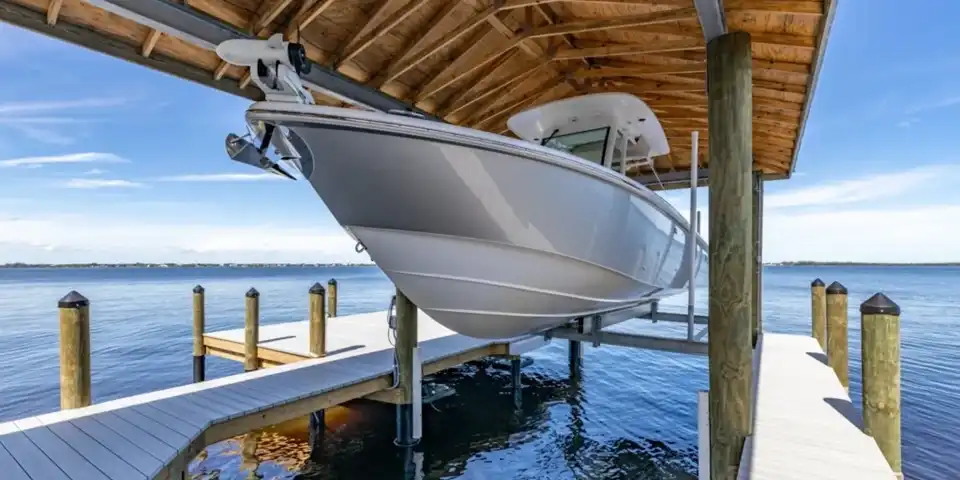
Elevated Boathouse Construction
Get year-round protection for your boat with a single- or double-slip boathouse designed for the Trinity River’s wind fetch. We build elevated structures with covered slips, integrate HydroHoist/ShoreStation-ready framing, and use 316 stainless or hot-dip galvanized fasteners for corrosion resistance. Our team navigates TRA/USACE PGP SWG-2007-00720 submittals and HOA/POA ACC approvals (e.g., Westwood Shores) to keep projects moving. Learn more about our Elevated Boathouse Construction services.
Dock Repair
Storm damage, rotten caps, loose hardware, or uneven floatation—we fix it. Our barge crews handle piling repair and replacement, re-decking, float drum swaps, winch repairs, and electrical troubleshooting. We use encapsulated floats, stainless hardware, and modern connectors to extend service life. Emergency service is available after severe weather. Learn more about our Dock Repair services.
Other Services We Offer
- Custom Dock Design
- Dock Re-Decking
- Dock Storm Damage Repair
- Emergency Dock Repair
- Dock Sealing & Staining
- Fixed Pile Dock Construction
- Custom Residential Dock Construction
- Commercial & Marina Dock Construction
- Covered Slip Construction
- Wood Dock Construction
- Composite Dock Construction
- Aluminum Dock Construction
- Concrete Dock & Seawall Construction
- Steel Sheet Piling Installation
- Boat Ramp Construction
- Boat Ramp Repair
- Piling Repair & Replacement
- Erosion Control Solutions
- Riprap Installation
- Retaining Walls for Waterfront Properties
- Seawall Construction
- Seawall Repair
- Trex Dock Installation
- TimberTech Dock Installation
- WearDeck Dock Construction
Why Choose Houston Docks for Trinity River Marine Construction
At Houston Docks, we pair local knowledge of Lake Livingston with proven marine construction standards. Our team has delivered hundreds of docks, boathouses, bulkheads, and lifts across Polk, San Jacinto, Trinity, and Walker counties. We manage permits, engineer for wind and wake, and wire to the 2023 NEC so your investment performs safely for years. If you’re looking for a dependable partner and a true Dock Builder Trinity River TX residents recommend, you’re in the right place.
Permitting Expertise: TRA, USACE, and HOA Approvals
Lake Livingston is governed by the Trinity River Authority under USACE Galveston District PGP SWG-2007-00720. We prepare site plans, cross-sections, and materials lists that align with the 2,500 sq ft over-water limit for private facilities and setback rules around coves and canals. Our submittals reduce revision cycles and keep projects on schedule.
We also coordinate county floodplain approvals and City of Livingston permits if work falls inside city limits. For communities like Westwood Shores and The Landing, we compile ACC packages with color selections, roofing, decking specs, and lift models. Having an experienced guide through the process protects your timeline and budget.
Safety-First Electrical and Construction Standards
Docks and boathouses are unique electrical environments. Our TDLR-licensed electricians implement 2023 NEC Article 555 requirements for GFCI/GFPE protection, bonding, dedicated emergency disconnects, and compliance with the electrical datum plane. We test with GFCI/GFPE meters and document results for your records.
On the build side, we follow OSHA 29 CFR 1926 marine safety, use fall protection on elevated structures, and design with NFPA 303 guidance. We recommend ESD (Electric Shock Drowning) warning signage and ensure lighting, conduits, and junction boxes are rated for wet locations and UV exposure.
Right Equipment, Durable Materials
We mobilize with a spud barge, pile driver/vibratory hammer, and crane/winch systems to set piles to engineered embedment. Underwater levels and laser alignment ensure straight runs and consistent elevations, while torque wrenches and impact drivers secure through-bolting and cross-bracing.
Materials matter: pressure-treated southern yellow pine or aluminum framing, composite/PVC decking, 316 stainless or hot-dip galvanized fasteners, and encapsulated float drums for freshwater durability. For shorelines, we install vinyl sheet piling with tiebacks and deadman anchors, riprap over geotextile fabric, and optional EcoPile vinyl piles by request.
Built for Lake Livingston Conditions
Water levels typically fluctuate 1–2 ft, so we specify gangway slopes and freeboard to maintain access year-round. In wind-exposed areas or boat traffic zones, we add hurricane strapping and uplift resistance. In protected coves, floating systems with encapsulated flotation minimize structural stress.
We also plan for local realities—zebra mussel precautions (Clean, Drain, Dry), lift lubrication schedules, and corrosion mitigation with galvanic isolation. Our designs balance performance with maintenance so ownership stays simple.
Clear Communication, Strong Guarantees
You’ll get a documented scope, timeline, and budget before work begins. We provide storm-damage response, annual maintenance plans, and workmanship warranties. Our crews show up on time, keep sites clean, and update you as milestones are hit.
From small PWC platforms to community fishing piers, our process is consistent and transparent. That’s why so many homeowners on Lake Livingston and the Trinity River refer us to neighbors and HOAs.
Dock Services Across Greater Houston, Lake Livingston, and the Trinity River
Houston Docks proudly serves residential and commercial clients throughout the Greater Houston region and Lake Livingston area. If you’re within a 25–30 mile radius of Trinity, Riverside, Onalaska, or Point Blank, we’ve likely worked in your neighborhood. Count on fast scheduling, barge access, and local permitting know-how.
Serving All Neighborhoods in Trinity River
We’re active around Westwood Shores, Wolf Creek Park, White Rock Creek/Parr’s Marina, Blanchard Boat Ramp, Patrick’s Ferry, and Lake Livingston State Park. Common zip codes we serve include 75862 (Trinity), 77367 (Riverside), 77360 (Onalaska), 77364 (Point Blank), 77331 (Coldspring), and 77351 (Livingston/West Livingston). We understand TRA guidelines, local covenants, and shoreline stabilization needs along the Trinity River and Lake Livingston.
Whether you need a pier extension, covered slip, bulkhead, or lift service, our crews deliver code-compliant dock services with quick local response. Your Dock Builder Trinity River TX is ready to help.
Other locations we serve near Trinity River
- Houston
- Pasadena
- Pearland
- The Woodlands
- League City
- Sugar Land
- Baytown
- Atascocita
- Conroe
- Missouri City
- Kingwood
- Spring
- Texas City
- Cypress
- Channelview
- Friendswood
- Mission Bend
- Deer Park
- Lake Jackson
- Alvin
- Fresno
- Cloverleaf
- Katy
- Dickinson
- Angleton
- Cinco Ranch
- Stafford
- Bellaire
- Manvel
- La Marque
- Humble
- Pecan Grove
- South Houston
- West University Place
- New Territory
- Seabrook
- Sienna Plantation
- Santa Fe
- Richmond
- Greatwood
- Four Corners
- Freeport
- Webster
- Clute
- Galena Park
- Jacinto City
- Harris County
- Fort Bend County
- Montgomery County
- Brazoria County
- Galveston County
- Liberty County
- Waller County
- Chambers County
- Lake Conroe
- Lake Livingston
- Lake Houston
- Lake Anahuac
- Galveston Bay
- East Bay
- West Bay
- Trinity Bay
- San Leon Bayfront / Dickinson Bay
- San Jacinto River
- Tomball
- Brazos River
- Clear Lake
- Seabrook / Kemah waterfronts
- Galveston Island & Jamaica Beach
- Bayou Vista & Tiki Island